

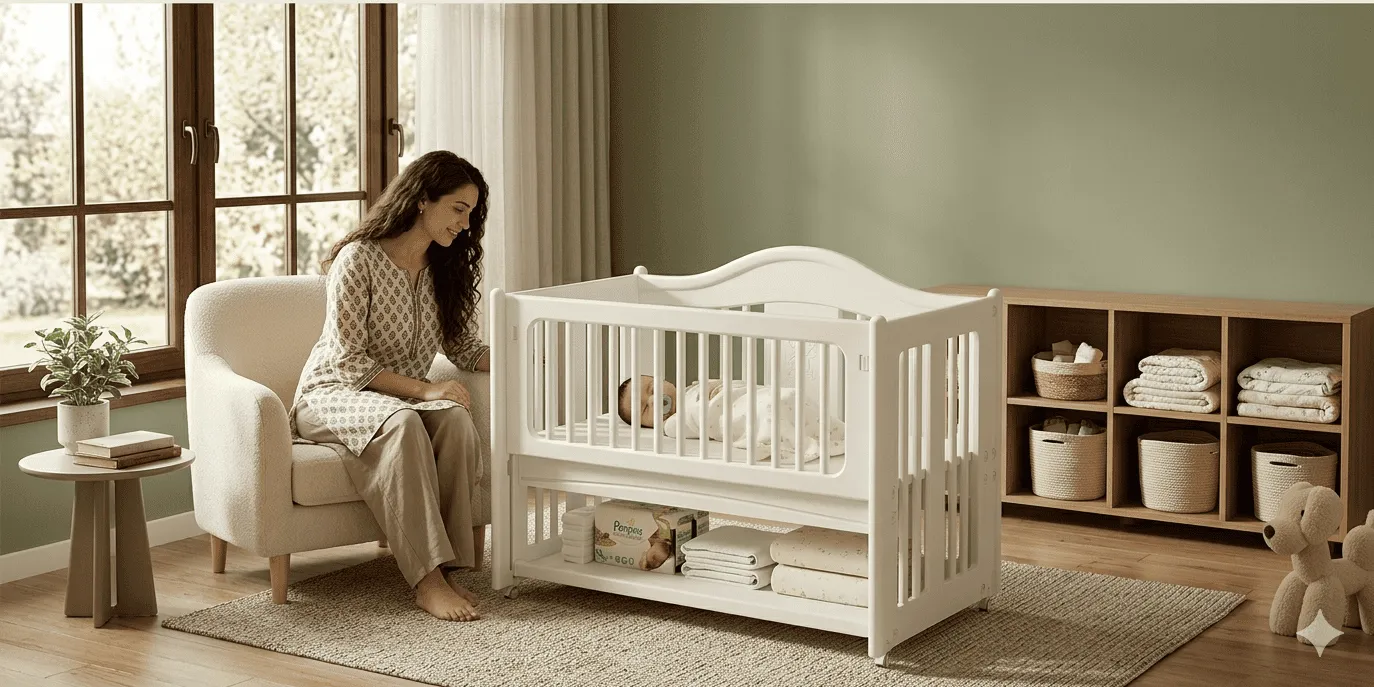
One of the most debated topics for new parents is where the baby should sleep. Should they be right next to you in a co-sleeper, or is an independent baby wooden cot the better choice for your family’s long-term routine?
Every family is different, and there is no “one-size-fits-all” answer. However, understanding the benefits of each approach—and how modern nursery furniture can bridge the gap—will help you make a confident decision.
Understanding the Options
Before diving in, it is important to distinguish between “bed-sharing” (sleeping in the same bed) and “room-sharing.” Pediatric experts generally recommend room-sharing for at least the first six months to ensure a safe sleep environment.
1. Independent Crib Sleeping
This involves placing the baby in their own dedicated baby cot crib within the nursery or your bedroom.
- Pros: Encourages self-soothing skills early on, provides a firm and flat dedicated surface, and allows parents more freedom of movement in their own bed.
- Cons: Can be physically demanding for breastfeeding parents who have to get out of bed multiple times a night.
2. Co-Sleeping (Side-Sleepers & Bedside Cots)
Modern co-sleeping cots are designed to attach securely to the side of the parents’ bed. One side drops down, allowing the baby to have their own safe mattress while remaining within arm’s reach.
- Pros: Simplifies nighttime feedings, provides instant comfort for fussy babies, and strengthens the emotional bond through proximity.
- Cons: Some babies may become very dependent on the parent’s presence to fall asleep, making the eventual transition to their own room slightly more challenging.
Bridging the Gap: The Versatile Baby Cot
If you aren’t sure which path to take, the best strategy is to invest in convertible baby furniture. Many high-quality wooden cots now offer features that cater to both styles:
- Removable Side Rails: Many cots allow you to remove one side to function as a bedside sleeper during the early months.
- Lockable Wheels: A cot with wheels allows you to keep the baby in your room at night but easily move them to a sunlit corner of the living room or nursery for daytime naps.
- Adjustable Heights: Use the highest mattress setting to mimic a co-sleeper height, then lower it as the baby grows to ensure a secure, independent sleeping space.
Creating a Safe Sleep Sanctuary
Regardless of which method you choose, safety remains the priority. To maintain a minimalist nursery that is also a safe haven, keep these “Gold Standards” in mind:
- Clear the Space: Whether in a co-sleeper or an independent cot, the mattress should be clear of pillows, heavy blankets, or plush toys.
- Firm Support: Ensure the mattress is firm and fits the frame perfectly with no gaps.
- Breathable Materials: Choose cots with non-toxic finishes and open slats to ensure maximum airflow around the baby.
Which is Right for You?
Choosing between co-sleeping and independent sleeping often comes down to your lifestyle:
- Choose Co-Sleeping if: You are breastfeeding and want to maximize your own rest between feedings, or if your baby has high “closeness” needs.
- Choose Independent Sleeping if: You are a light sleeper who is easily disturbed by baby’s movements, or if you want to establish a strict nursery routine from day one.
Final Thought: Many parents find that a “hybrid” approach—starting with a bedside co-sleeper and transitioning to a full wooden cot by 6 months—offers the best of both worlds.