

Preparing for a new arrival is an exciting whirlwind, but it often comes with a realization: babies require a lot of gear. For the eco-conscious parent, the challenge is balancing the need for nursery storage with a commitment to sustainability.
Enter the sustainable baby wardrobe. Gone are the days of “disposable” particle-board furniture. Today’s parents are choosing pieces that prioritize planet-friendly materials and longevity. Here is how choosing an eco-friendly, convertible wardrobe can transform your home and reduce your environmental footprint.
Why Sustainability Matters in the Nursery
When we talk about “eco-friendly” furniture, we aren’t just talking about trees. It’s about creating a healthy environment for your little one. Most conventional furniture is treated with harsh chemicals and VOCs (Volatile Organic Compounds) that can off-gas into your home.
- Non-Toxic Finishes: Sustainable wardrobes use water-based, lead-free, and non-toxic paints.
- Certified Materials: Look for FSC-certified wood (Forest Stewardship Council) to ensure the timber is harvested responsibly.
- Air Quality: Choosing GREENGUARD Gold Certified pieces ensures the furniture meets strict chemical emissions standards, keeping the nursery air pure.
The “Grow-With-Me” Philosophy: Furniture That Lasts
The most sustainable product is the one you only have to buy once. Modular baby wardrobes are designed to evolve as your child moves from diapers to primary school.
1. Adjustable Shelving and Hanging Rails
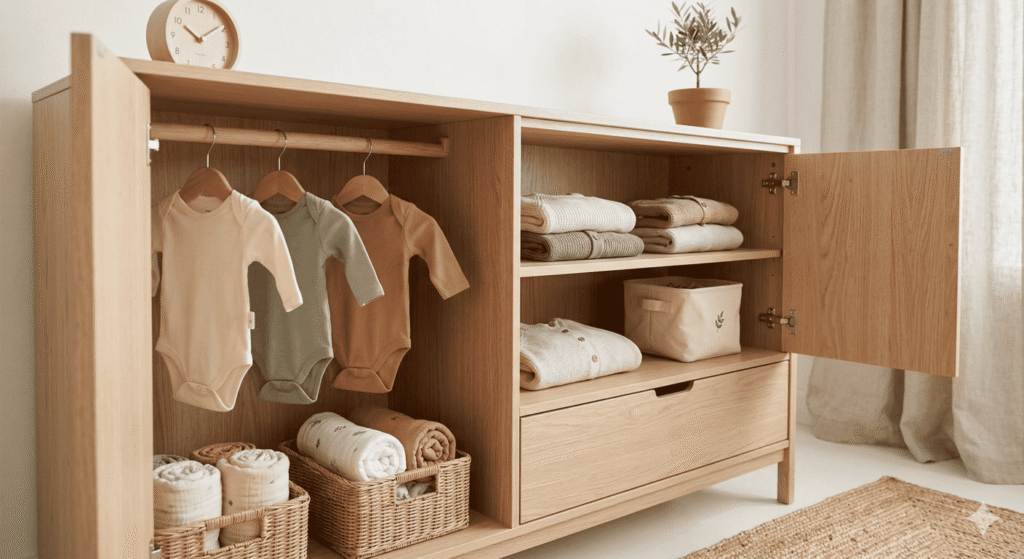
Newborn clothes are tiny, but teenagers’ hoodies are not. A sustainable wardrobe features adjustable rails that can be moved upward or removed entirely to accommodate longer garments as your child grows.
2. Conversion Kits
Many eco-friendly brands offer wardrobes that can be reconfigured. What starts as a nursery armoire with a changing station on top can later transition into a sleek bookcase or a standard bedroom closet.
3. Timeless Aesthetics
“Elegant” is a keyword for a reason. By choosing minimalist, Scandinavian, or mid-century modern designs, you avoid the “too-childish” look. Natural wood finishes and neutral tones ensure the piece looks just as good in a guest room or a teen’s bedroom as it does in a nursery.
Organizing for a Minimalist Home
A high-quality wardrobe doesn’t just hold clothes; it organizes your life. By investing in a piece with smart compartments, you can maintain a clutter-free home:
- Hidden Drawers: Perfect for tucking away cloth diapers or bulky winter blankets.
- Open Cubbies: Use these for “grab-and-go” items like swaddles or your favorite bedtime stories.
- Sustainable Bins: Pair your wardrobe with wicker or organic cotton bins to categorize sizes (0–3 months, 3–6 months) without the plastic waste.
Final Thoughts: Investing in the Future
Choosing a sustainable baby wardrobe is an investment in both your child’s health and the planet they will inherit. By opting for “grow-with-them” furniture, you save money in the long run and keep bulky furniture out of landfills.
Quality over quantity is the ultimate nursery organization hack. When your furniture is built to last, your home remains a sanctuary of calm rather than a revolving door of plastic storage.